Lesson 6 of 12 / Reproduction
How flowers are adapted for pollination
Why are a wind-pollinated flower's anthers and stigmas often exposed?
In this lesson: Use flower and pollen features to explain adaptation to insect or wind pollination.
About 5 min
The key ideaFlower structures fit the pollen carrier: contact with an insect or exposure to moving air.
The schematics show typical patterns. Real flowers and pollen vary; practise recognising their structures in the photographs below.
Compare real flowers and pollen
Use the flower views to compare structures, then the light micrographs to compare pollen surfaces.
Find the petals, anthers and rounded stigma tips. Which parts could a visiting insect contact?
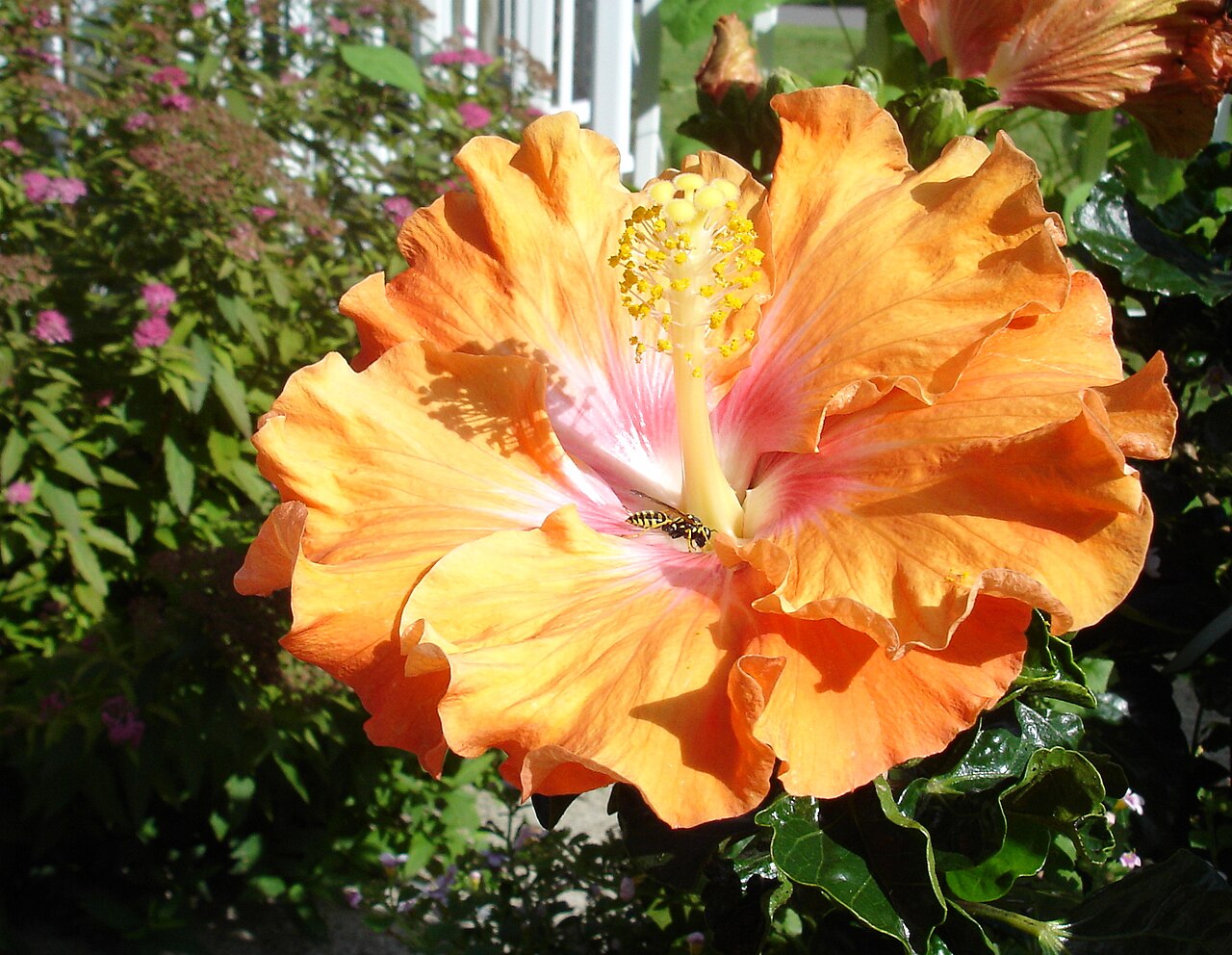
Use a hand lens on fresh flowers and prepare and focus pollen slides in your practical lesson. Photographs support identification practice; viewing them does not complete that hands-on work.
Explanation
In insect-pollinated flowers, petals, scent and nectar can attract insects. Anthers and stigmas are positioned so an insect brushes against them. Sticky or sculptured pollen can attach to the insect and later transfer to a stigma.
Wind-pollinated flowers do not need to attract an animal carrier. Their petals are often small or inconspicuous, with little scent or nectar. Anthers may hang outside the flower on long filaments, exposing pollen to air movement.
Large, feathery stigmas provide an exposed surface that intercepts airborne pollen. Small, light, relatively smooth grains travel more easily in air. Large quantities increase the chance that some reach a suitable stigma.
These are common patterns, not infallible rules for every species. Base a comparison on several observed features and explain how each affects transfer. A pollen grain's exact shape alone is not proof of its pollination method.
Use fresh specimens and a hand lens to compare anther and stigma position, petals and visible structures. Examine pollen from each under the same microscope magnification when comparing grain size. Record observations before inferring the carrier.
Step by step
- 1
Record a feature
For example, exposed hanging anthers or a broad feathery stigma.
- 2
Explain the mechanism
Exposed anthers release pollen to air; a feathery stigma intercepts it.
- 3
Use several observations
Compare specimens and pollen without assuming that one trait proves the answer.
Worked example
A flower with no conspicuous petals
A flower has dangling anthers, feathery stigmas and abundant light pollen. Suggest its pollination method and explain two observations.
One way to explain it
Wind pollination is likely. Dangling exposed anthers let air remove pollen, while feathery stigmas present a large surface for catching airborne grains. Abundant light pollen also supports this interpretation.
Why this answer works
- Name the likely carrier.
- Link each observed structure to how it works.
- Use evidence rather than colour alone.
Is this true? "A feathery stigma makes pollen fly farther."
The stigma receives pollen. Its large exposed surface helps catch airborne grains; pollen release occurs at the anther.