Lesson 4 of 12 / Reproduction
Flower parts and their functions
Which structures produce pollen, receive it and contain the female gamete?
In this lesson: Identify an insect-pollinated flower and connect its structures to their functions.
About 5 min
The key ideaStamens produce pollen; a carpel receives pollen and contains ovules. Petals attract pollinators and sepals protect the bud.
The schematics show typical patterns. Real flowers and pollen vary; practise recognising their structures in the photographs below.
Find the parts in a real flower
Move between three views to identify parts that an intact flower hides.
Find the petals, anthers and rounded stigma tips. Which parts could a visiting insect contact?
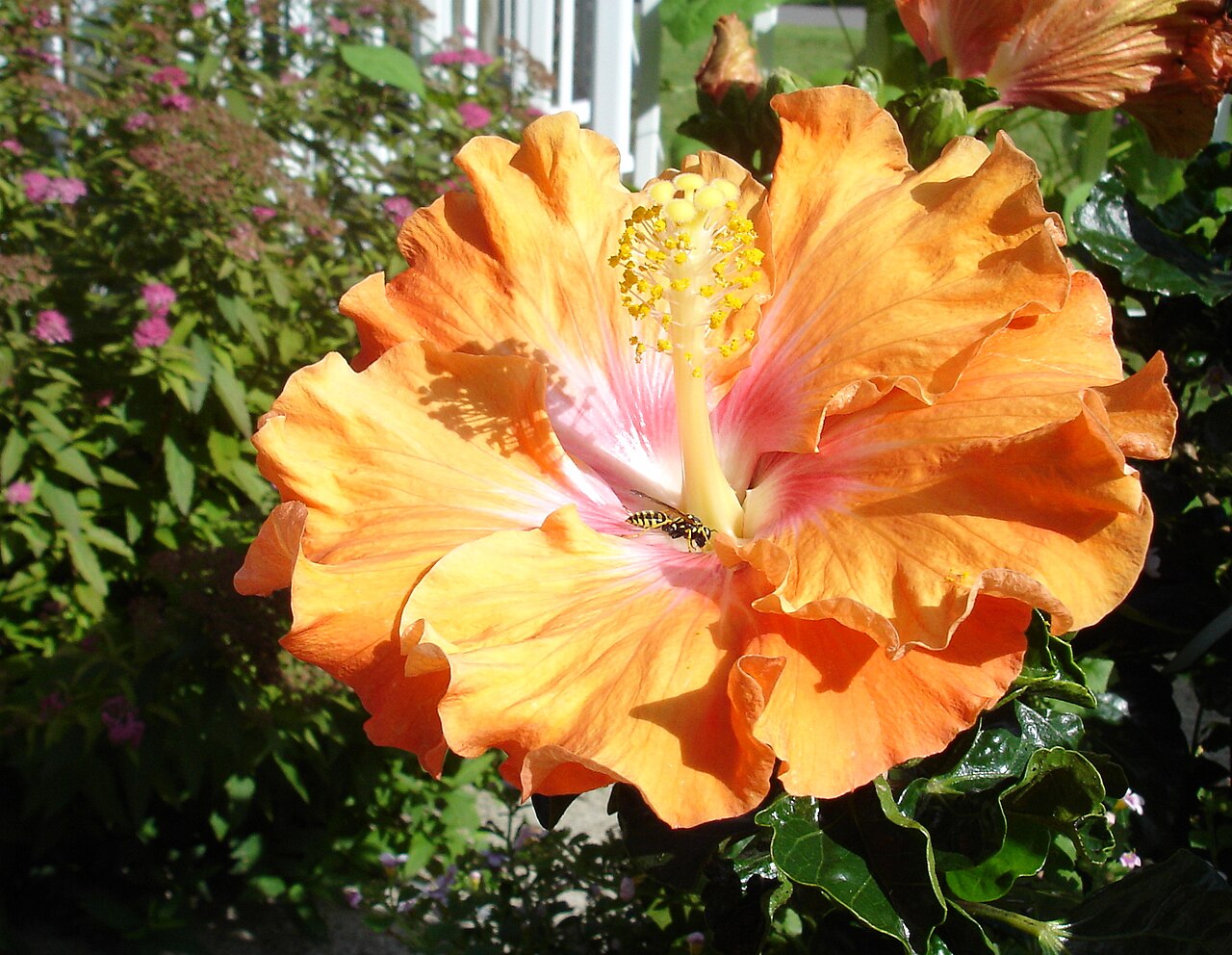
Use a hand lens on fresh flowers and prepare and focus pollen slides in your practical lesson. Photographs support identification practice; viewing them does not complete that hands-on work.
Explanation
A typical insect-pollinated dicotyledonous flower has sepals, petals, stamens and carpels. Sepals form the outer protective layer around the developing bud. Petals are often conspicuous and can help attract insects.
Each stamen consists of a filament supporting an anther. The anther produces pollen grains, which contain the male reproductive cells. A pollen grain is not itself a complete male gamete nucleus.
A carpel consists of a stigma, style and ovary. The stigma receives pollen. The style connects it to the ovary and provides the route for pollen-tube growth. The ovary contains ovules, each containing a female gamete.
For specimen work, examine the whole flower first, then use a hand lens to locate small structures. Record what you observe, including numbers and positions; real flowers do not all match a perfectly symmetrical diagram.
For pollen observation in supervised practical work, place a little pollen from an anther on a slide in a drop of water, add a coverslip and begin at low microscope power. Record grain shape and visible surface features. The illustration here supports recognition; it does not replace handling specimens and using a microscope.
Step by step
- 1
Locate the outer structures
Find sepals and petals before looking for reproductive structures.
- 2
Separate stamen and carpel
Anthers belong to stamens; stigma, style and ovary belong to a carpel.
- 3
Link each part to a job
Produce pollen, receive pollen, guide the tube, or contain ovules.
Worked example
Anther or stigma?
A structure releases many small grains when gently tapped. Another has a receptive surface at the top of the carpel. Identify each and explain its role.
One way to explain it
The grain-producing structure is an anther, which produces pollen. The receptive structure is the stigma, where pollen lands during pollination.
Why this answer works
- Use function as evidence for identification.
- Do not confuse producing pollen with receiving it.
Is this true? "The ovary and the ovule are the same structure."
The ovary contains ovules. Fertilisation occurs inside an ovule, not throughout the whole ovary.